Laboratory and Imaging
Digital Laboratory and Imaging Management for Faster Veterinary Diagnosis
Accurate diagnosis is the foundation of effective veterinary treatment. Laboratory testing and diagnostic imaging provide the clinical information veterinarians need to identify diseases, monitor treatment progress, and make informed medical decisions. However, managing laboratory requests, imaging records, and diagnostic reports manually often leads to delays, fragmented data, and increased administrative workload.
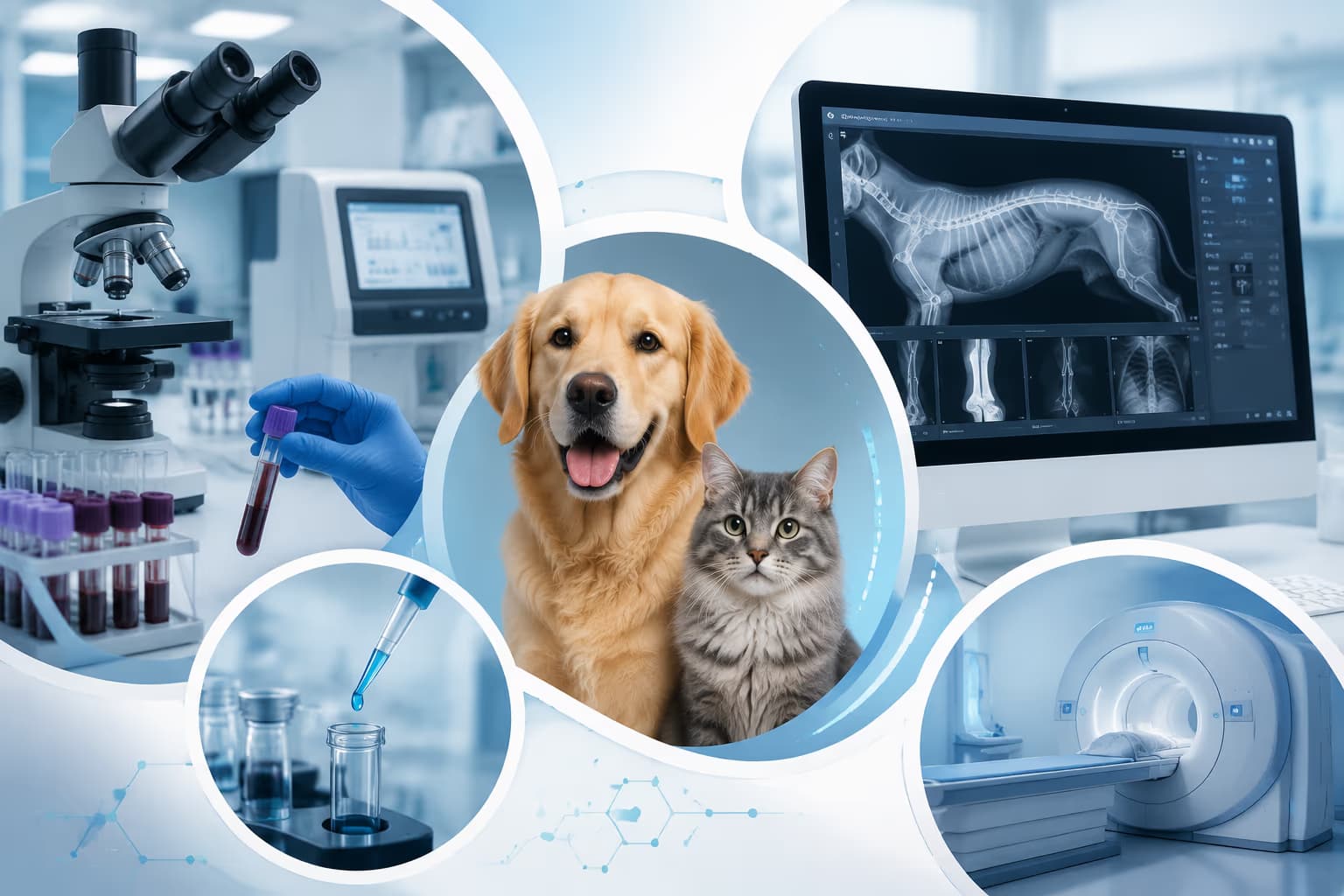
Modern veterinary practice management software centralizes laboratory and imaging workflows into a single digital platform, allowing clinics to improve efficiency while maintaining complete patient records and diagnostic history.
Streamline Laboratory Workflows
Veterinary clinics perform numerous laboratory tests every day, including complete blood counts, biochemistry panels, urinalysis, hormone testing, and many other diagnostic analyses.
Digital laboratory management allows veterinarians to create comprehensive laboratory requests within seconds while organizing multiple test groups under a single request. Every laboratory result is automatically linked to the patient's medical record, making historical test results immediately available whenever they are needed.
This centralized workflow improves efficiency while ensuring complete traceability throughout the diagnostic process.
Automatic Laboratory Device Integration
Integrating laboratory analyzers with veterinary software eliminates repetitive manual data entry.
Each laboratory request is assigned a unique identifier that allows compatible analyzers to automatically associate completed test results with the correct patient record. Once analysis is complete, laboratory values are transferred directly into the patient's medical history without additional administrative work.
This automation improves accuracy, accelerates diagnostic workflows, and significantly reduces the risk of transcription errors.
AI-Assisted Clinical Decision Support
Artificial intelligence is becoming an increasingly valuable tool in veterinary diagnostics.
AI-powered clinical decision support systems compare laboratory values against extensive veterinary disease databases, helping veterinarians identify potential conditions based on complex diagnostic patterns. Blood chemistry, hematology, hormone analysis, blood gas measurements, and other laboratory findings can be evaluated together to support differential diagnosis.
Clinicians can also compare disease profiles and laboratory patterns, allowing for more comprehensive medical evaluations and more confident clinical decision-making.
Centralized Digital Imaging Management
Diagnostic imaging plays a critical role in modern veterinary medicine.
Digital imaging management enables X-ray requests, radiology reports, and medical images to be securely linked to each patient's medical record. Clinics using manual imaging workflows can upload radiographs directly, while PACS-integrated environments automatically transfer images into the veterinary management system immediately after acquisition.
This creates a secure, centralized archive where diagnostic images remain permanently available for future reference and ongoing patient care.
Monitor Treatment Progress Through Historical Comparisons
One laboratory result rarely tells the complete clinical story.
Digital comparison tools allow veterinarians to review laboratory values collected over multiple visits, making it easier to evaluate treatment effectiveness, monitor chronic diseases, and identify subtle changes in patient health over time.
Historical comparisons support evidence-based medical decisions while improving long-term patient management and overall quality of care.
Conclusion
Digital laboratory and imaging management significantly improves diagnostic efficiency, clinical accuracy, and patient record organization within veterinary practices. Automated analyzer integration, AI-assisted diagnostic support, PACS-compatible imaging management, and centralized patient records allow veterinary professionals to make faster, better-informed clinical decisions.
The E-vet Smart Laboratory and Imaging Module brings every stage of the diagnostic workflow together into one intelligent platform, helping veterinary clinics deliver more accurate diagnoses, improve operational efficiency, and provide a higher standard of patient care.
Click for the E-vet Smart Laboratory and Imaging Module details.