Laboratory
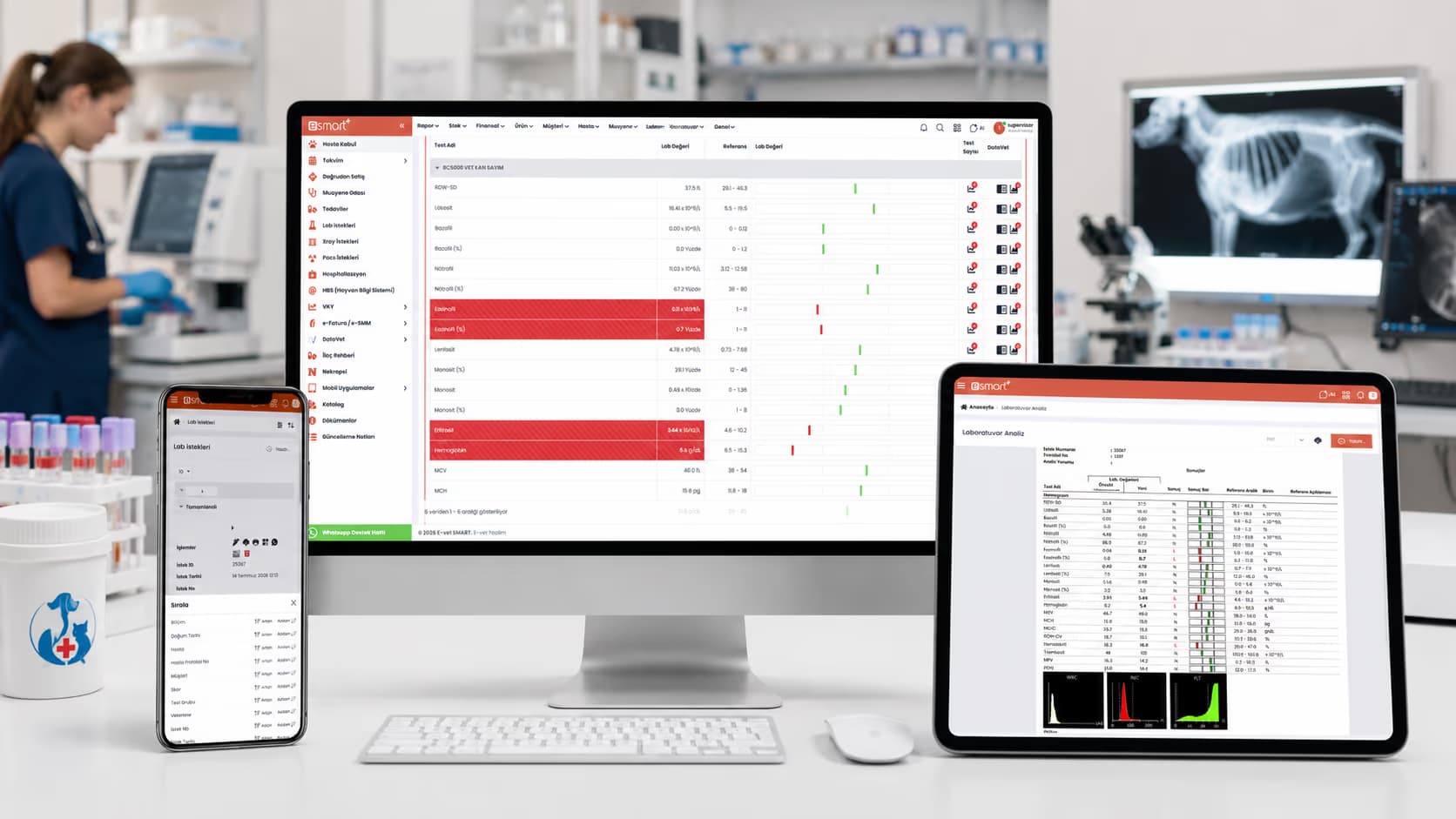
The Lab Requests module enables you to manage the processes of requesting, tracking, and finalizing laboratory analyses performed in your clinic through a single platform. You can create laboratory requests, select test groups, automatically transfer results to the system via device integrations, and easily track the entire laboratory history through the patient card.It ensures that imaging procedures performed in your clinic are planned, managed, and archived in a digital environment. In clinics operating with manual X-ray management or PACS integration, radiology requests, images, and results are stored securely by associating them with the patient file. Thus, imaging processes become faster, systematic, and trackable.
How does this feature work?
Highlights
- Create laboratory requests with ease
- Receive results automatically with device integration
- Benefit from AI-powered clinical decision support with Datavet
- Compare diseases and laboratory results
- View past analyses from a single screen
- Share results securely via SmartVet
- Manage laboratory processes quickly, systematically, and securely
- Create radiology requests quickly and easily
- Manage imaging processes with manual X-ray or PACS integration
- Transfer radiological images to the system automatically or manually
- Track scan statuses from a single screen
- Archive images securely by linking them to the patient file
- Share radiology results with pet owners via SmartVet
- Access past radiology records and images with ease
Laboratory Request Management Module
Laboratory Request Management
The E-vet Smart Laboratory Request Management Module enables veterinary clinics to manage laboratory testing workflows from a single platform, including test requests, result processing, clinical evaluation, and secure record archiving. The module streamlines communication between veterinarians and laboratory staff while ensuring that every laboratory result is securely linked to the patient's medical record.
When creating a laboratory request, users can define the request date, laboratory test groups, diagnostic parameters, and clinical notes. Multiple test panels and analyses from different laboratory analyzers can be combined within a single request, allowing laboratories to manage complex diagnostic workflows efficiently.
Laboratory Analyzer Integration
For clinics using integrated laboratory analyzers, every laboratory request is assigned a unique Request ID that automatically matches test orders with connected laboratory devices. Once testing is completed, results are transferred directly into the patient's laboratory record and medical history without manual data entry. This automation minimizes transcription errors, accelerates result reporting, and improves laboratory efficiency.
Datavet Clinical Decision Support System
Datavet is an AI-powered clinical decision support system that helps veterinarians interpret laboratory findings and improve diagnostic accuracy. Laboratory parameters such as complete blood count (CBC), biochemistry, urinalysis, hormone profiles, blood gas analysis, and other diagnostic results are compared against an extensive veterinary disease database.
Based on laboratory findings, Datavet suggests potential differential diagnoses ranked by similarity scores. For each possible disease, veterinarians can review etiology, susceptible species and breeds, clinical signs, laboratory findings, prognosis, diagnostic recommendations, and treatment approaches. The system also allows side-by-side comparison of different diseases, supporting faster and more informed clinical decision-making.
Laboratory Result Comparison
The Result Comparison feature allows veterinarians to compare laboratory results from different dates for the same patient. Changes in blood values, biochemical parameters, and diagnostic markers can be monitored over time, helping clinicians evaluate treatment effectiveness, monitor disease progression, and make evidence-based medical decisions.
SmartVet Laboratory Sharing
Laboratory reports can be securely shared with pet owners through the SmartVet mobile application. Once laboratory analysis is completed, the system can automatically notify the owner, allowing them to access laboratory results anytime through the mobile app.
Radiology Management Module
Radiology Management
The Radiology Management Module enables veterinary clinics to digitally manage diagnostic imaging requests, examinations, reporting, and image archiving. Every radiology request is linked directly to the patient's medical record, allowing veterinarians to access previous imaging studies quickly and securely.
X-Ray Requests (Manual Workflow)
For manual workflows, radiology requests include the examination date, imaging device, and anatomical region to be examined. After image acquisition, radiographs can be uploaded in JPEG or PNG format. Once the request is marked as completed, all images are automatically stored within the patient's medical history.
PACS Integration (Automated Workflow)
Clinics using PACS integration can automatically transfer radiology requests to imaging devices through the modality worklist. Once imaging is completed, diagnostic images are automatically synchronized with E-vet Smart and linked to the appropriate patient record. This eliminates manual image uploads, accelerates radiology workflows, and preserves data integrity.
SmartVet Image Sharing
Radiology images can be securely shared with pet owners using the SmartVet mobile application. After approval, owners receive secure access to diagnostic images directly from their mobile devices.
PACS History & Image Archive
The PACS History module provides centralized access to all previous imaging studies. Veterinary professionals can review historical images, generate secure sharing links, monitor examination status, and access radiology records together with attending veterinarian information, imaging details, and examination history.
Frequently Asked Questions
Laboratory
What is a Veterinary Laboratory Management System?
A Veterinary Laboratory Management System helps clinics manage laboratory requests, diagnostic testing, result reporting, and medical record archiving from a centralized platform. It improves workflow efficiency while ensuring secure access to patient laboratory data.
Does E-vet Smart integrate with laboratory analyzers?
Yes. E-vet Smart integrates with supported laboratory analyzers, allowing test results to be transferred automatically into the patient's medical record without manual data entry.
Can AI analyze laboratory results?
Yes. The Datavet Clinical Decision Support System analyzes laboratory findings using an extensive veterinary disease database and suggests possible differential diagnoses to support clinical decision-making.
Can previous laboratory results be compared?
Yes. Veterinarians can compare laboratory results from different dates to monitor disease progression, evaluate treatment effectiveness, and identify long-term health trends.
Can radiology images be stored digitally?
Yes. All diagnostic images are securely archived within the patient's medical history, allowing veterinarians to review previous imaging studies whenever necessary.
Does E-vet Smart support PACS integration?
Yes. E-vet Smart supports PACS integration, enabling automatic image transfer from diagnostic imaging devices directly into the patient's medical record while eliminating manual uploads.
Can laboratory reports and radiology images be shared with pet owners?
Yes. Laboratory reports and radiology images can be securely shared through the SmartVet mobile application, allowing pet owners to access diagnostic information anytime from their mobile devices.
Keep exploring
Other features
Ready to bring your clinic into the digital age?
Try E-vet Smart Plus for free. No setup, no commitment — just a faster, more organized clinic.